Resources
This page includes downloadable guides, checklists, a quiz, glossary links for AI terms, and additional resources. New content is added regularly, so check back often.

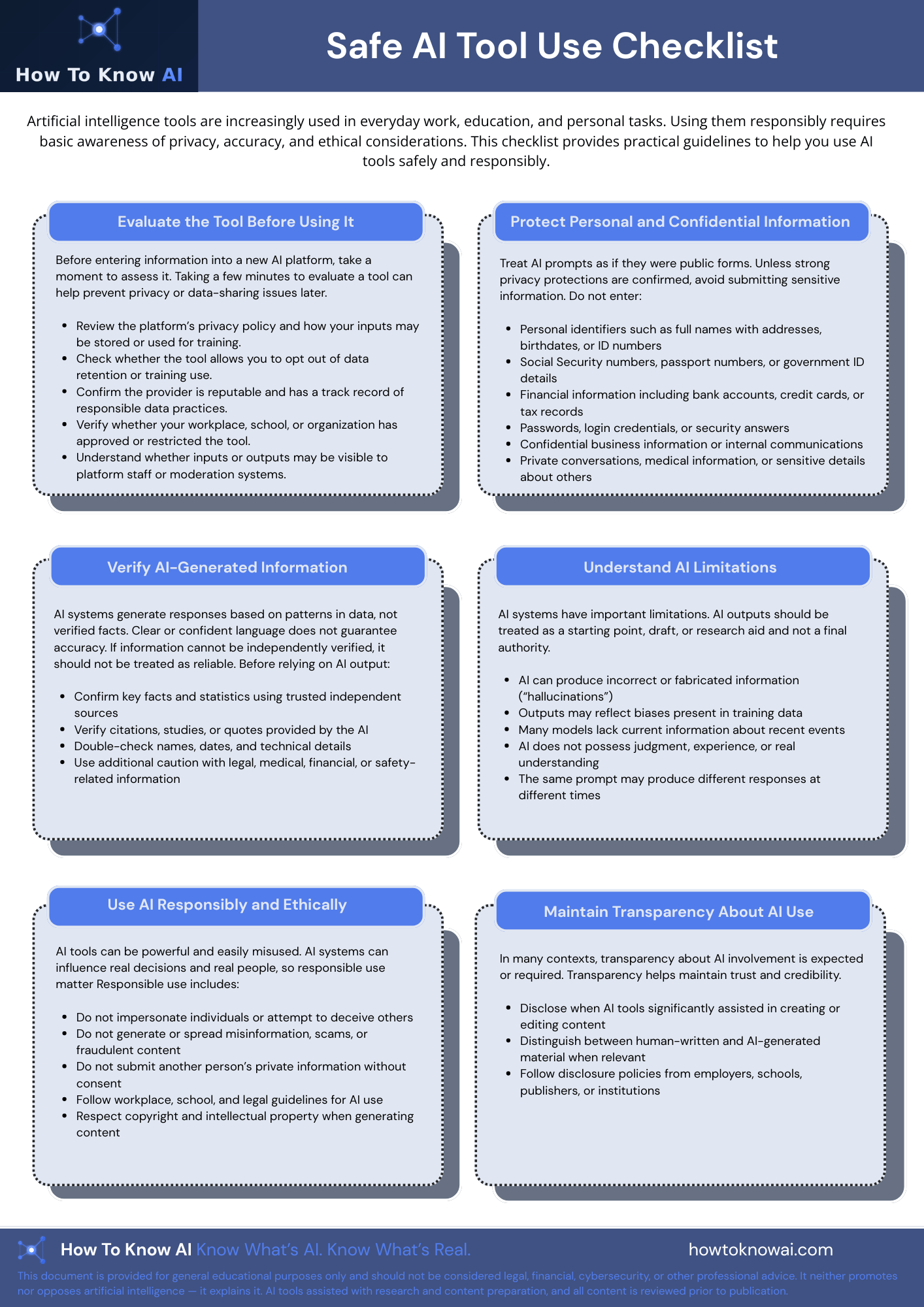
Safe AI Tool Use Checklist
Artificial intelligence tools are increasingly used in everyday work, education, and personal tasks. Using them responsibly requires basic awareness of privacy, accuracy, and ethical considerations. This checklist provides practical guidelines to help you use AI tools safely and responsibly.
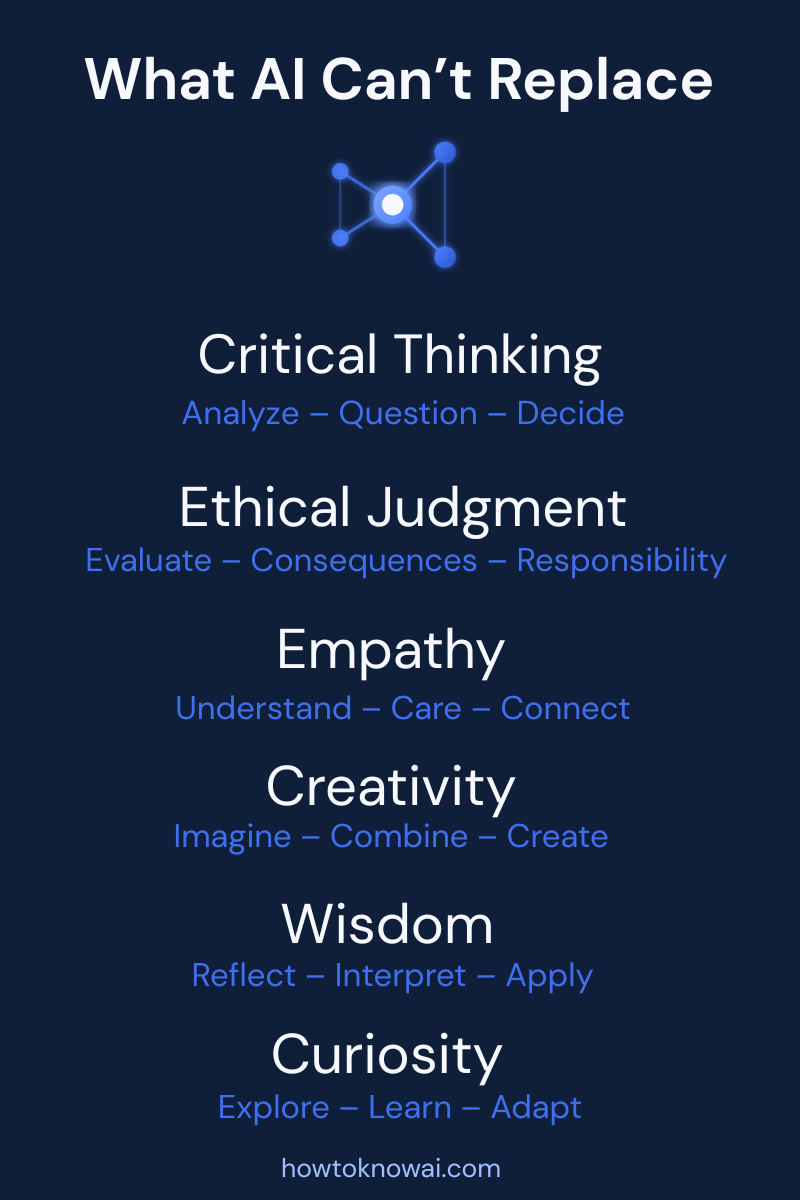
What AI Can’t Replace Infographic
Artificial intelligence (AI) can analyze data and generate responses, but it does not possess human awareness, lived experience, or moral responsibility. Human thinking involves reflection, context, and the ability to evaluate meaning and consequences. These traits allow people to question assumptions, interpret complex situations, and make judgments that extend beyond patterns in data.
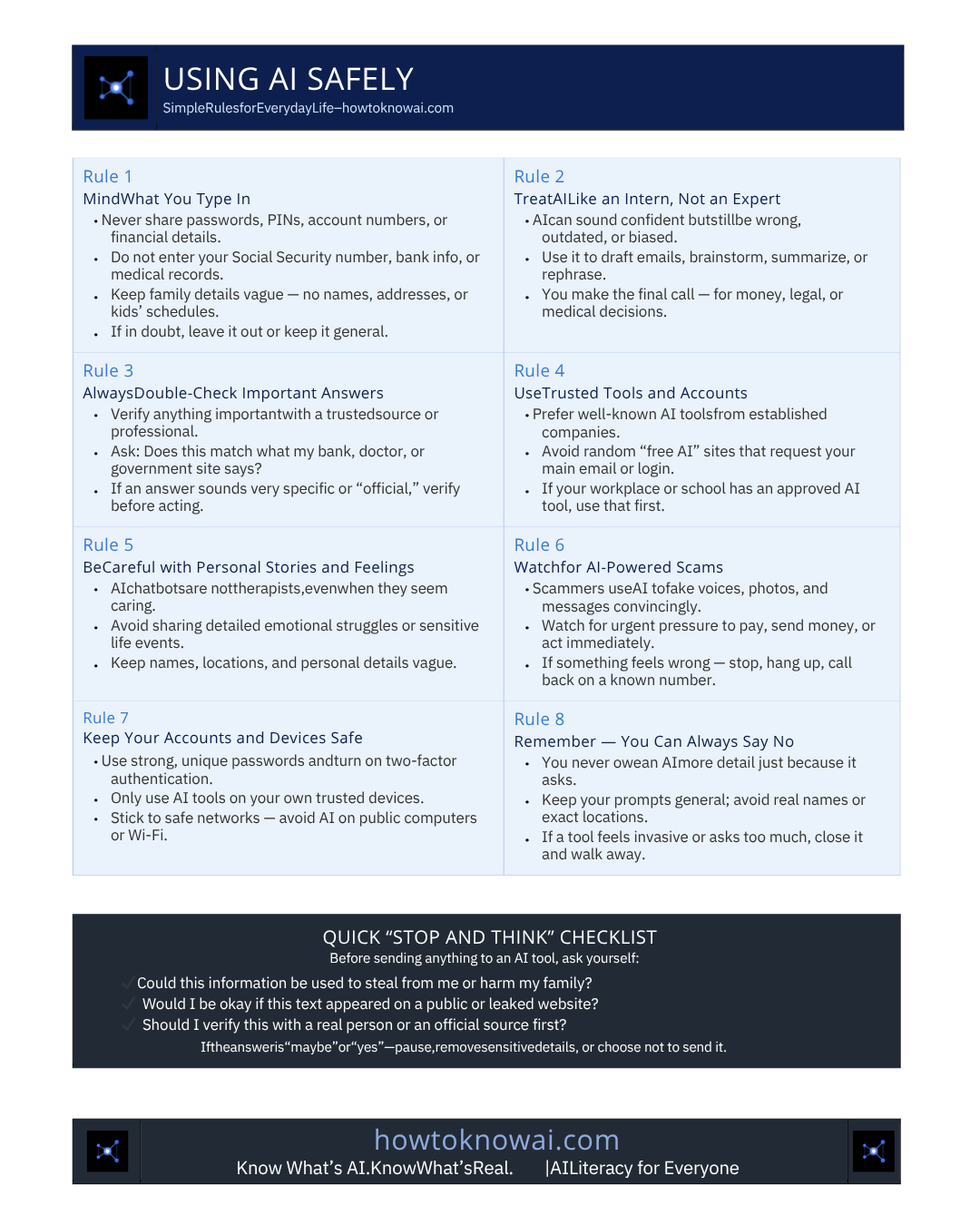
Using AI Safely Guide
Simple rules and a quick checklist for Using AI Safely
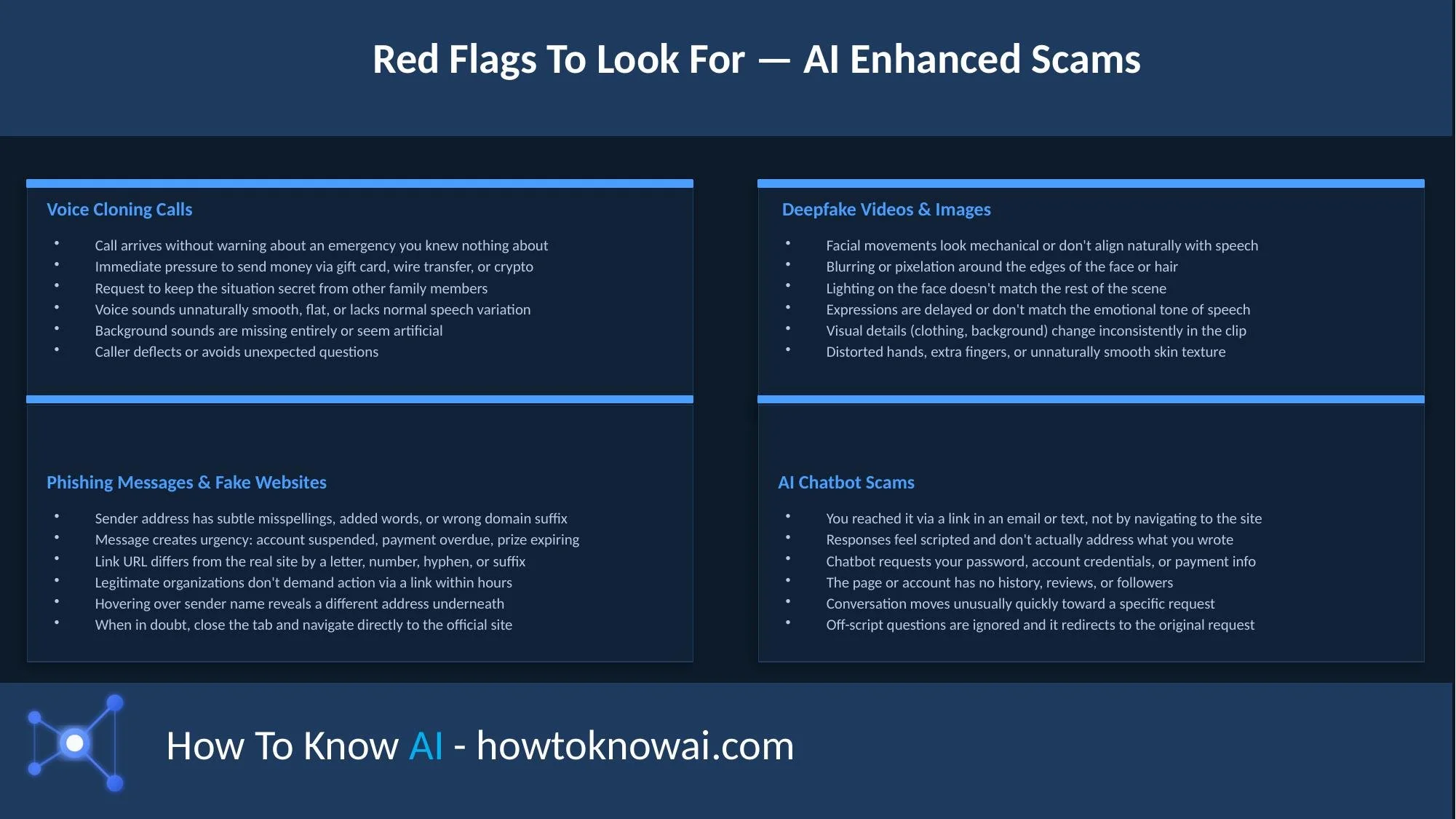
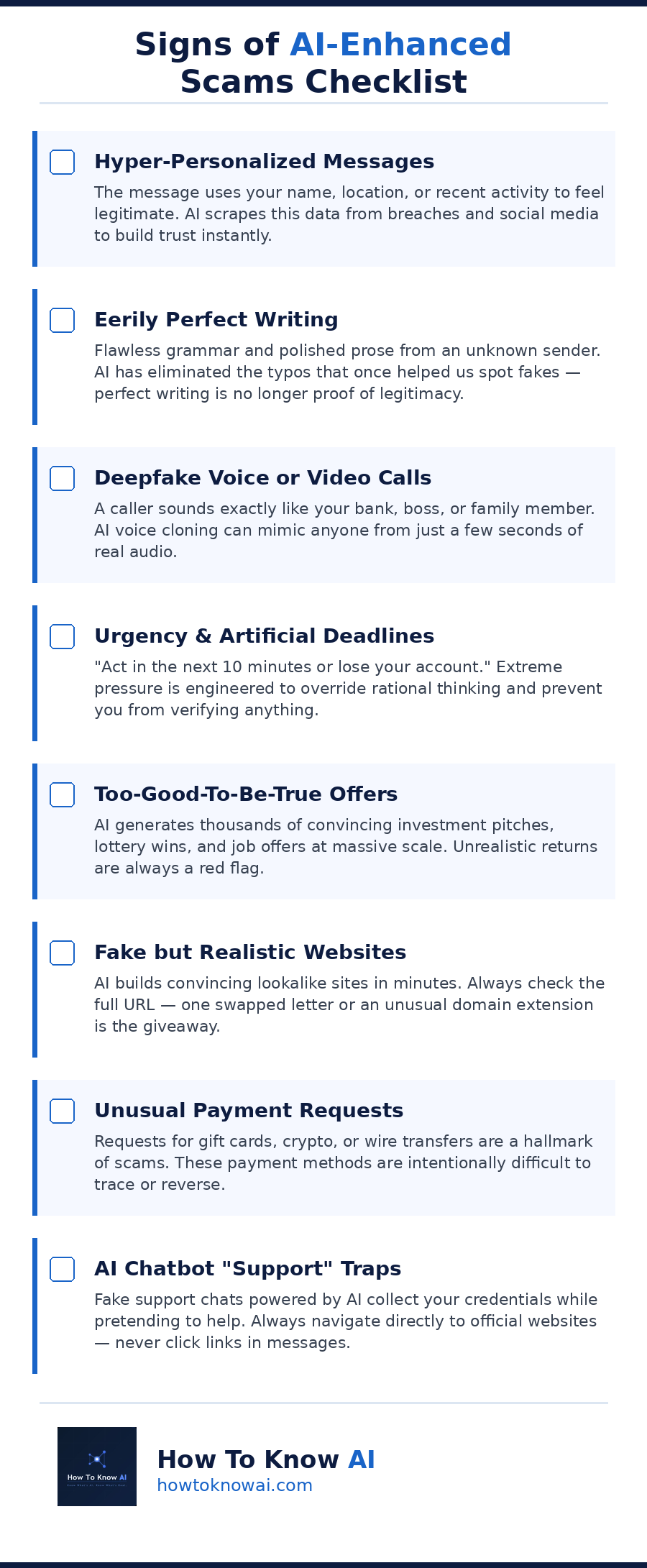
Red Flags To Look For- AI Enhanced Scams
Knowing the specific signs or Red Flags to look for gives you a real advantage. No single warning sign confirms that something is a scam, and not every contact will show all of these signals. What they do tell you is that a situation deserves a pause and a closer look before you take any action. Verifying takes a few minutes. Recovering lost money can take months if it is possible at all.
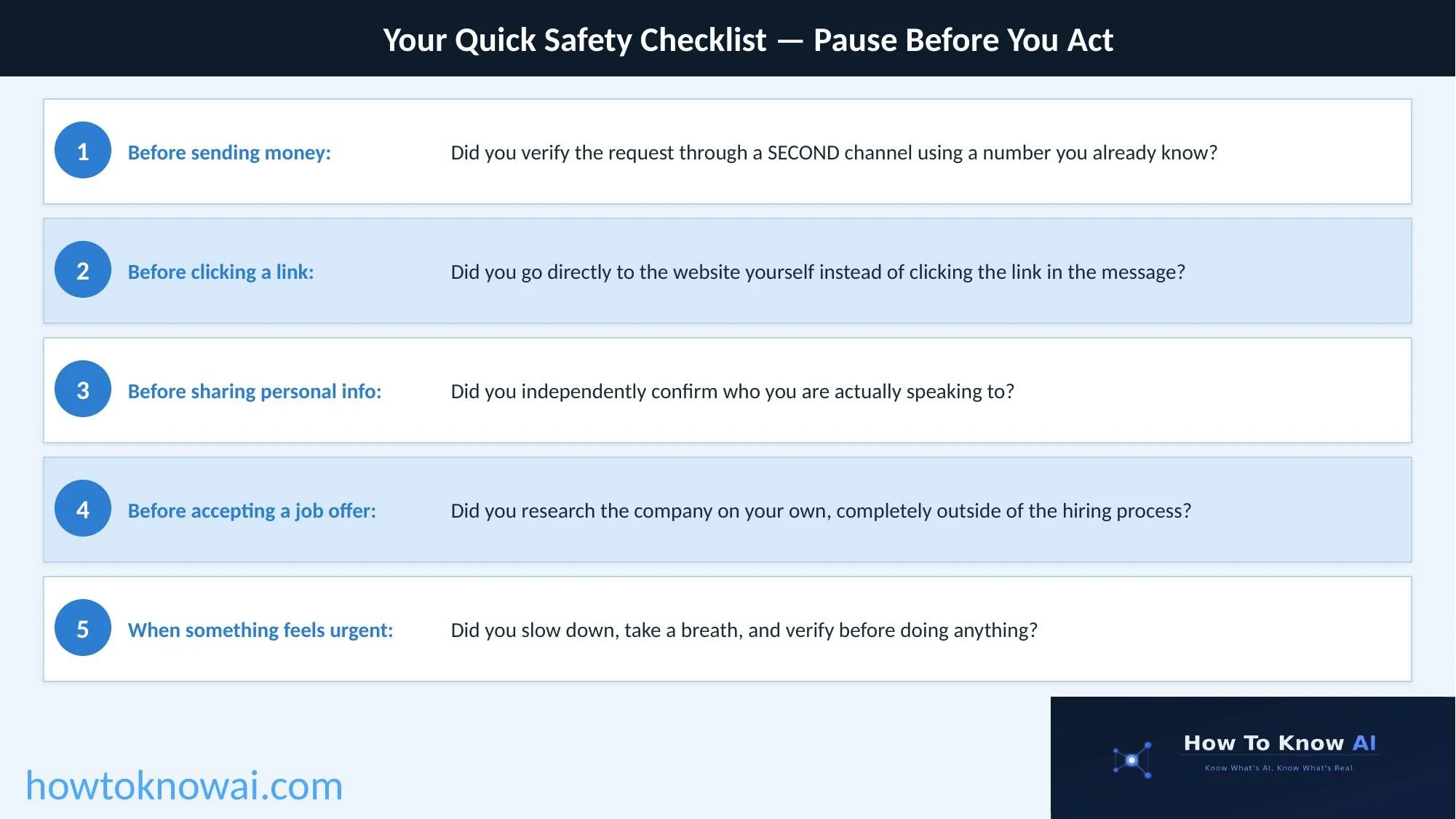
Your Quick Safety Checklist
AI-enhanced scams follow the same core pattern. They create urgency, imitate trusted sources, and pressure quick action before there is time to verify. The most effective response is to slow down. Treat any unexpected request involving money, personal information, or immediate action with caution. Pause and verify using a separate, trusted method of contact.
Signs of AI-Enhanced Scams Checklist
Test You AI Knowledge Quiz

Glossary of AI Terms