AI and Kids: A Guide for Parents and Educators
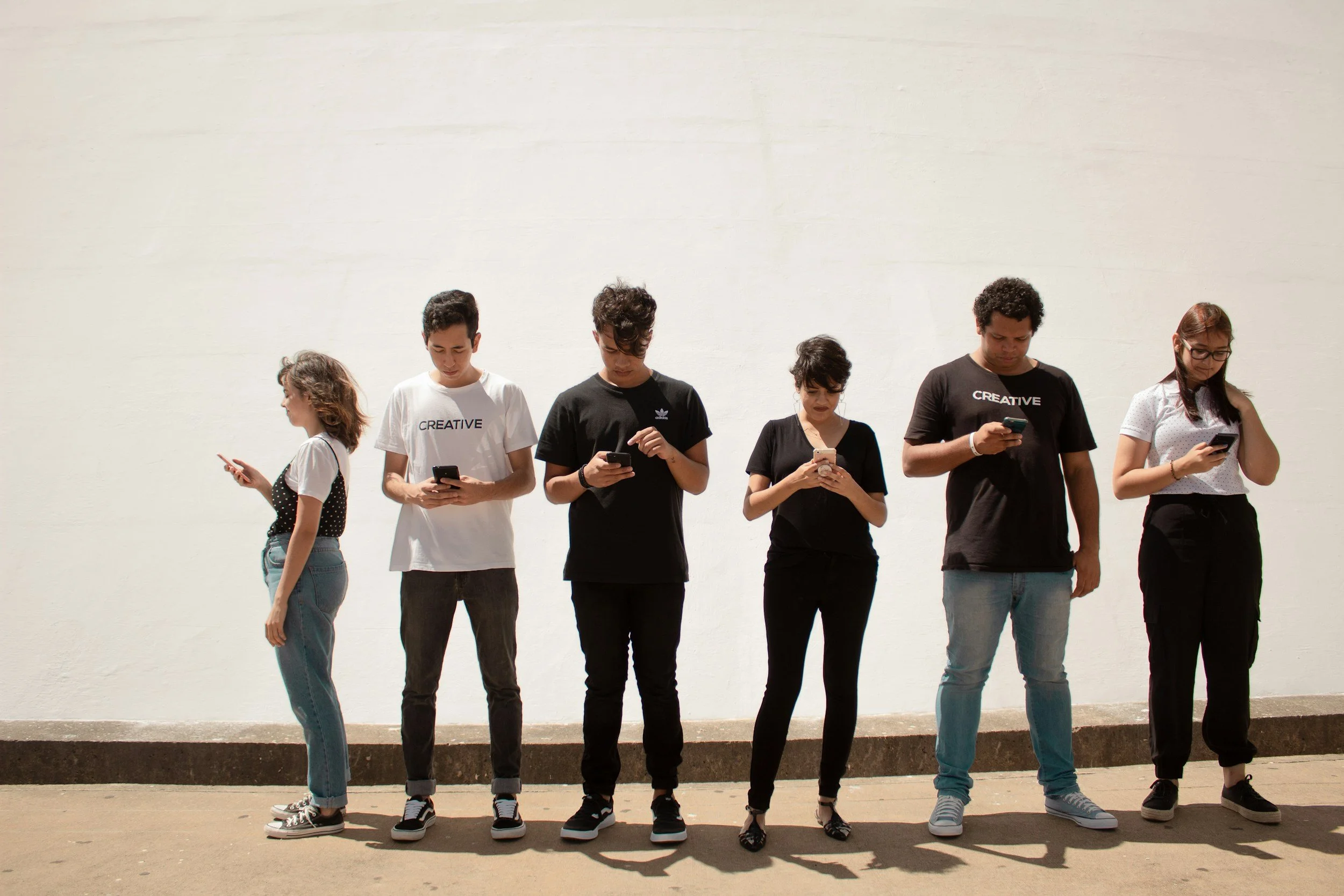
Artificial intelligence is already part of children's daily lives, whether families have discussed it or not. It appears in the apps kids use for entertainment, the platforms they use to communicate, the tools some are using to help with schoolwork, and the content they encounter online. Most children have not been given a framework for understanding what AI is, how it works, or where the risks begin.
The information on this page is provided for general educational purposes only. Nothing on this site constitutes legal or professional advice. If a child has experienced online harm or abuse, contact the appropriate authorities or support organizations listed in the resources section below.


Where Children Already Encounter AI
Children interact with AI regularly, often without recognizing it. Understanding where it appears is the starting point for any conversation about it.
Social media platforms use AI to determine what content appears in a child's feed and in what order. These systems are designed to maximize engagement, which means they tend to surface content that provokes strong reactions, without regard for accuracy or age appropriateness. A child who watches one video on a topic may find their entire feed shifting toward more of the same, including content that becomes progressively more extreme or age-inappropriate.
Recommendation systems on streaming and gaming platforms study viewing and playing habits to suggest what to watch or play next. These systems have no awareness of age-appropriateness. They respond to patterns in behavior, not to what is suitable for a particular child.
AI chatbots and writing assistants are increasingly used by students for homework help, research, and writing. Tools like ChatGPT, Gemini, and others are widely accessible, with free versions available to anyone. Many students use them without guidance on their limitations or the academic honesty expectations of their school. Most major AI tools including ChatGPT, Gemini, and Claude have a minimum age requirement of 13, and some require users to be 18 without parental consent. These age limits are not consistently enforced. Parents should be aware that a child under 13 using these tools may be doing so outside the platform's terms of service, and without the protections those terms are meant to provide.
AI-generated images, audio, and video appear in content children consume daily on platforms like YouTube, TikTok, and Instagram. Children who have not been taught to recognize synthetic media have little basis for evaluating whether what they are seeing is real.
Voice assistants in smart speakers and on phones respond to children's questions using AI. The answers provided are not always accurate, and children who treat voice assistant responses as reliable facts can develop habits of uncritical acceptance that carry over into other areas.
Talking to Kids About AI: By Age Group
Children's capacity to understand AI develops with age. These are starting points, not rigid rules.
-
At this age, the most important concept is that computers can make things that are not real.
Children this age can understand that a drawing made by a computer is not the same as a drawing made by a person, and that computers can say things that are wrong.
Keep the conversation simple and concrete. Encourage asking before believing or sharing anything surprising.
Useful questions to ask: "Do you know if a person or a computer made that?" and "How would we check if that is true?"
-
Children this age can begin to understand that AI learns from large amounts of information, that it can give incorrect answers while sounding completely certain, and that it can be used to create fake images and videos.
This is also the age when many children begin using social media and are more likely to encounter AI-generated content. Conversations about verifying information before sharing it are appropriate and important at this stage.
Begin talking about the difference between something looking real and actually being real.
-
Teenagers can engage with more complex ideas: how AI systems are trained, what bias in AI means, how deepfakes are made and used, and what responsible use of AI tools looks like in an academic and professional context.
This is also the age when conversations about academic honesty and AI become most relevant. Teenagers are more likely to be using AI writing tools and need clear guidance from both parents and schools about expectations.
Encourage critical evaluation of AI tools and their outputs, and talk openly about the difference between using AI as a learning aid versus substituting it for their own thinking.


AI, Homework, and Academic Honesty
AI writing tools are widely available, easy to use, and produce results that can be difficult to distinguish from student work. This has created significant challenges for schools and significant confusion for students and parents about what is and is not acceptable.
-
There is currently no consistent national standard for how schools handle AI use in student work.
Policies vary significantly between schools and even between teachers within the same school, with some prohibiting AI entirely, others allowing it with disclosure, and others still working out their approach.
The most important step a parent can take is to ask the school directly what its policy is, and then have a clear conversation with their child about those expectations.
Vague guidance leads to students making their own judgment calls, which often results in unintentional violations.
Questions to bring to your child's school:
Does the school have a written AI use policy, and where can I find it?
Are teachers expected to communicate their individual AI expectations to students at the start of each assignment?
What happens if a student violates the AI policy? Is there an appeal process?
-
AI tools can be genuinely useful for brainstorming, getting unstuck, understanding a difficult concept, or reviewing a draft.
The problem arises when AI output is submitted as the student's own thinking and writing without disclosure.
-
Schools are working through questions that have no settled answers yet:
how to assess student work in an environment where AI assistance is easy and widespread
how to update academic honesty policies to reflect new tools
how to teach students to use AI responsibly rather than simply banning it.
Many educators are finding that banning AI entirely is both difficult to enforce and misses an opportunity to prepare students for a world where AI literacy is increasingly valuable.
Deepfakes and Online Safety for Children
Deepfake technology creates risks that are specific and serious for young people. Parents and educators should be aware of three risks in particular.
Synthetic Media in Social Content
Children encounter AI-generated images and videos regularly on social platforms. Content that appears to show real events, real people, or real statements may be entirely fabricated. Children who are not taught to question the authenticity of what they see online are more vulnerable to misinformation and manipulation. A simple habit to teach: before believing or sharing something surprising, ask where it originally came from and whether a reliable source has confirmed it.
Image-Based Abuse
AI tools make it possible to generate realistic synthetic images of real people in compromising situations. This technology has been used to target teenagers, including by other teenagers. This is sometimes referred to as non-consensual intimate imagery, and the synthetic version created by AI is a growing form of this abuse. Parents should be aware that this form of abuse exists, that it can affect children as young as middle school age, and that children who experience it should be supported immediately without blame. Reporting options include the National Center for Missing and Exploited Children's CyberTipline at www.missingkids.org and the platform where the content appeared.
AI in stranger contact
AI can generate convincing personas used to contact children online. A profile with a realistic photo, a plausible backstory, and responsive conversation may not represent a real person at all. The basic guidance about not sharing personal information with people met online remains essential and applies equally to AI-generated contacts. Encourage children to verify identities before trusting or meeting someone from an online interaction, and to report suspicious contact to a trusted adult.
Questions to Start the Conversation at Home
You do not need to be an AI expert to have a useful conversation with a child about these topics. These questions are designed to open a discussion rather than deliver a lecture.
Have you ever wondered whether something you saw online was made by a computer?
If you got an answer from a chatbot, how would you check whether it was actually right?
Does your school have rules about using AI for homework? Do you know what they are?
If someone you did not know contacted you online and the profile seemed completely convincing, how would you decide whether you were talking to a real person?
What would you do if someone sent you an image of you that you knew was fake?
Practical Best Practices for Everyday AI Use
These habits apply to everyday AI use across any tool or context and are worth sharing with students and children directly.
Treat AI outputs as drafts, not final answers.
Verify important information before relying on it or sharing it.
Do not enter sensitive, confidential, or personal data into AI tools.
Cross-check specific claims, especially statistics, names, dates, and sources, using independent references.
Be cautious with AI-generated media, as a convincing image or video is not evidence on its own.
Disclose AI use when appropriate, especially in academic or professional contexts. Use reputable tools with clear and accessible privacy policies.
Apply your own judgment in all decisions, as AI can inform but should not replace human reasoning.
Sources and Further Reading
Common Sense Media, age-based guidance on technology and media for families: https://www.commonsensemedia.org
National Center for Missing and Exploited Children, CyberTipline: https://www.missingkids.org/gethelpnow/cybertipline
Internet Matters, online safety guidance for parents and educators: https://www.internetmatters.org
ConnectSafely, research-based safety guides for parents, educators, and teens: https://www.connectsafely.org
TAKE IT DOWN Act: https://www.congress.gov/bill/119th-congress/senate-bill/146
FBI Safe Online Surfing program for students: https://sos.fbi.go
StopBullying.gov, federal resource on cyberbullying and online safety: https://www.stopbullying.gov

Key Takeaways for Parents and Educators
Children encounter AI regularly in their social feeds, homework tools, and the content they consume online. Most do not have a framework for understanding what it is or where the risks are. Parents and educators do not need a technical background to address this. Knowing where AI appears in children's daily lives, understanding the basics of how it works, and being aware of the specific risks it creates for young people is enough to start an informed conversation. The pages linked throughout this site are designed to support exactly that.
Last Reviewed: March 2026